
A payment terminal on every table, for restaurants with table service.
Guests settle up and tip where they are sitting — no waiting for a card machine to be carried over, no walk to the till. Between payments the screen works for you, showing your offers instead of a printed table tent.
Two commercial models, both agreed per estate — a monthly rental, or our “more than free” model.
Take the terminals on a monthly rental, or on our “more than free” model where the service is funded by optional fees rather than by you. Which one fits depends on the size of the estate.
- ModelMonthly rental or “more than free”
- Pay at the tableCard, contactless and wallet
- TippingOffered in the same tap
- Advertising screenIncluded
- Installation£0 — not required
- DeliveryPosted to your venue
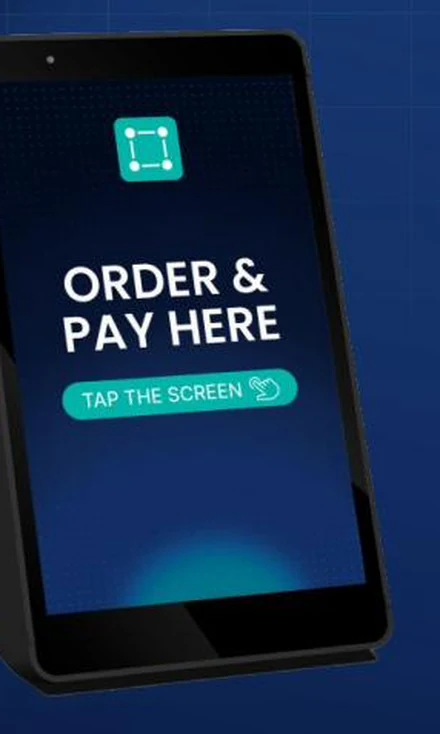
How it works at the table
The terminal stands where the printed table tent used to. It plays your promotions while the guests eat, and when they are ready it takes the payment and offers the tip in a single tap — no camera, no code to scan, no page waiting to load.
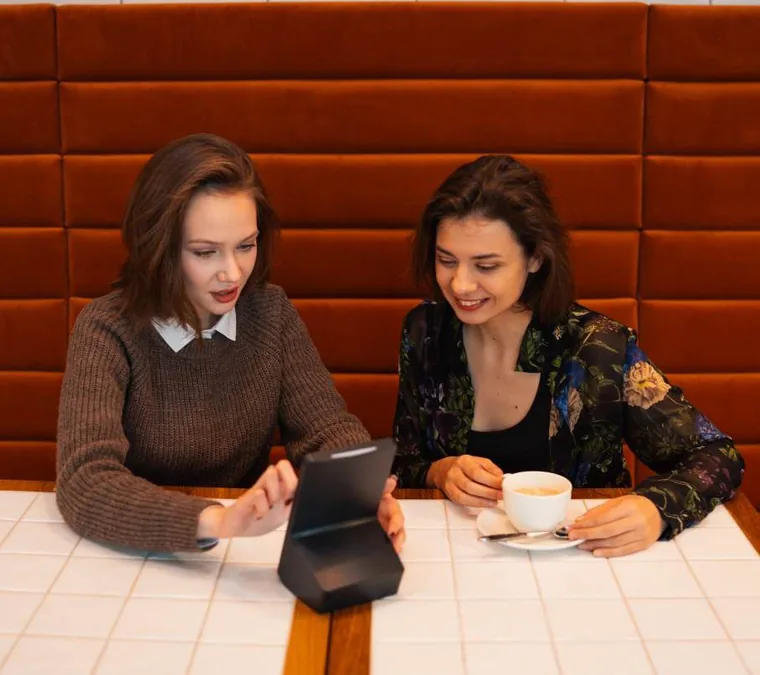
- Pay and tip without leaving the table
- Three times more tipping than a QR code
- Integrated with your POS and payment stack
An extra pair of hands at every table
The terminal does not replace the server — it removes the two errands that eat the shift. Nobody carries a card machine across the room and nobody waits at the pass to close a bill.
-
Pay the moment they are ready
The bill is settled where the guests are sitting, so the table turns without a single trip across the room.
-
Tips asked at the right time
The tip is offered in the same tap as the payment, while the service is fresh in mind rather than as an awkward afterthought.
-
Loyalty joined at checkout
Signing up sits inside the payment flow, so the guest joins in the moment rather than at the door.
-
Feedback before they leave
A short question at the end of the payment catches a problem while the manager can still fix it.
Hospitality brands already running on Kate One






How much it costs
There is no price list, because the answer depends on how many venues and how many tables. There are two models, and we will tell you which one fits on the first call.
-
Monthly rental
- A fixed monthly figure per terminal, covering the hardware, the software, updates and support.
- Nothing is bought, so there is no capital purchase and no asset to depreciate.
- Faulty units are replaced while you rent.
- The figure is quoted per estate and confirmed in writing.
-
“More than free”
- The terminals cost the venue nothing. The service is funded by optional fees added at checkout, which a guest can decline.
- The advertising screen replaces the table tents and inserts you reprint every month.
- Cashless tipping rises, which lands with the team rather than with us.
- Available depending on the size of the estate and the average transaction — agreed case by case.
Both models are indicative and for marketing purposes only. Neither is a formal offer and neither forms a contract. The “more than free” model is described as a commercial structure, not as a guarantee of income for the venue; whether it is available, and on what terms, depends on the number of sites, the average transaction and the fee arrangement agreed with you. Any fee shown to a guest is optional, disclosed on screen before payment and can be declined. Final terms are issued in writing by a Kate One sales manager.
The terminal can put more into the venue than it ever takes out
Kate One does not bill the venue at all. The service is funded by the optional 3% fee a guest may add at checkout, so the economics work without a line on your invoice — and three things then start moving in your favour.
-
Staff earn more
Tipping through a tabletop terminal happens three times as often as tipping through a QR code, in a trade where cash — and with it cash tipping — is disappearing.
-
Print spend stops
The screen carries offers, specials and new dishes on video, so the table tents, inserts and pavement boards you reprint every month are simply not needed.
-
Tables turn faster
Guests settle where they are sitting instead of waiting for a handheld or queueing at the till, so the same room serves more covers in the same shift.
The guest decides whether to add the service fee, and declining it changes nothing about the terminal, the payment or the venue's terms.
What the terminal does
Three jobs at the table, and one deliberate omission.
-
Collects tips, three times over
Tipping at the terminal happens three times as often as tipping through a QR code. There is no camera to open, no code to scan, no page to wait for and no amount to type — the guest taps once and it is done.
-
Takes the payment at the table
Guests settle up where they are sitting, without waiting for a handheld to be carried over or walking to the till. Card, contactless and wallet.
-
Runs your advertising on every table
The screen plays video and promotional content — offers, specials, new dishes — and the content changes in a moment, with nothing to reprint and no insert to fold.
-
No menu, by design
There is no ordering function — the terminal does not replace your ordering system, it works next to it. Where you want payments, tips and guest data to land in your POS or loyalty platform, we integrate with it.
What venues see once the terminals are on the tables
The pattern holds across formats: guests tip more readily, pay sooner and say more about the visit.
- ×3more tipping than through a QR code
- +25%more reviews and loyalty sign-ups
- 93%guest satisfaction with the service
- £0installation — posted and put on the table
Figures are drawn from venues working with Kate and are given as a guide. Results vary by format, average spend and where the terminals sit on the table.
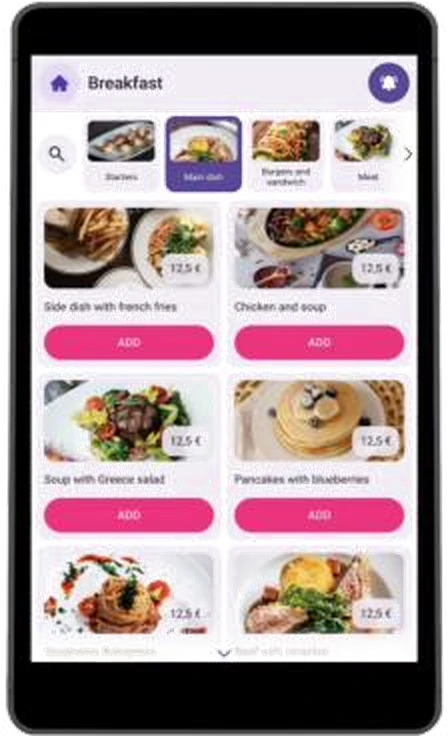
The terminal itself
Small enough to leave on a laid table, sturdy enough to be handled by a few hundred guests a week.
Features
- Portrait screen sized for a table for two and a bar counter
- Promotions and specials between payments, switched by daypart
- Interface in your brand colours and typography
- Housing built for a dining room: guest hands, spills and drops
- Camera reads QR codes, barcodes and coupons so a voucher applies on the spot
Specifications
- BatteryA full service day on one charge — 24 hours of working time.
- ChargingA station that holds and charges 16 batteries, so a swap takes seconds.
- ScreenPlays video and promotional content between payments, on every table.
- PaymentsCard, contactless and wallet taken at the table.
- FootprintTakes the space of a table tent and doubles as the surface it replaces.
- Guest sideNo phone, no app, no QR code and no dependence on the guest's own signal.
Works with your stack
POS: Oracle, Zonal, Syrve, Access, 3S POS, Untill
Payments: Elavon, Viva, Adyen
Loyalty & data: Wired into the platforms you already run — confirm on the call.
How a venue gets started
The terminal arrives, you place it, it works.
-
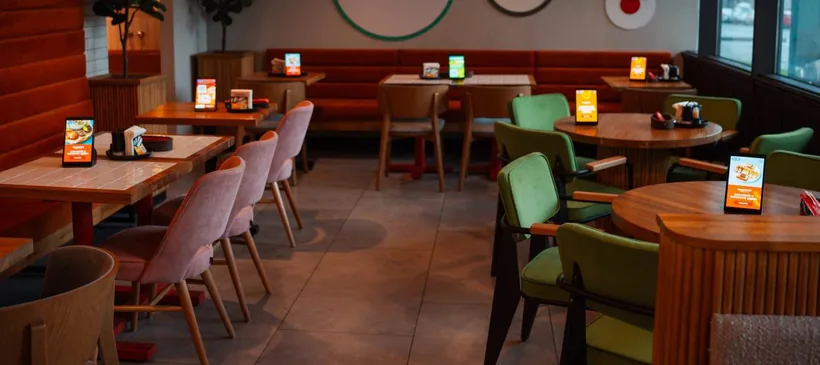
It is posted to your venue
The terminals ship by courier with the charging station in the same delivery. No engineer, no fitting date, no installation.
-
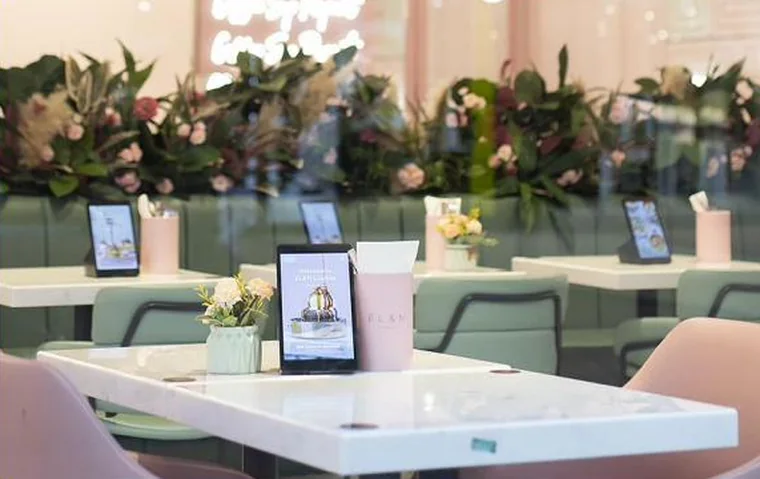
You stand it on the table
Out of the box, charged, upright. It replaces the table tent it is standing next to and starts playing your promotions.
-
Guests pay and tip
Payment is taken at the table and the tip is offered in the same tap, while the service is still fresh in mind.
Why a terminal beats a QR code
A QR code asks the guest to find a phone, open a camera, join the wi-fi, wait for a page and then type an amount. Plenty of tables never get that far, and the tip is the first thing to fall off the end of that list.
The terminal is already on the table, already awake and already showing your brand. Tipping through it happens three times as often, and the venue pays nothing for the privilege.
-
Nothing to download
No app, no QR code, no page to load before a guest can pay or leave a tip.
-
Independent of guest signal
The terminal runs on your network, so a basement dining room is not a dead zone for payments.
-
Paying without the wait
The bill is settled the moment the guests decide, not when a handheld is free to be carried over.
-
Your brand on the screen
Colours, logo and promotional video are set to your brand, so the table reads as yours.
-
Advertising between payments
The screen carries offers and specials where a table tent used to sit, with nothing to reprint.
-
Fits your systems
We integrate with the POS, payment and loyalty platforms you already run, so payments and tips land where the rest of your data lives.
QR codes, apps and a terminal on the table
All three let a guest pay without a server standing over them. Only one of them is already on the table, awake, and showing your brand.
| QR code or app | Kate One terminal | |
|---|---|---|
| What the guest needs | A phone with charge, a camera, a signal and patience | Nothing — the terminal is already on the table |
| Before they can pay | Scan, load a page, sometimes install an app or sign in | One tap |
| Tipping | Asked after several steps, and often skipped | Offered in the same tap as the payment, three times as often |
| Dependence on signal | Fails in basements, thick walls and busy venues | Runs on your own network |
| Guests without a smartphone | Excluded, and it is usually the older table | Served the same as everyone else |
| Between payments | The code sits there doing nothing | The screen plays your offers and specials |
| Printed material | Table tents and inserts still reprinted | Replaced by the screen |
| Brand experience | A browser page that looks like a browser page | Your colours, logo and photography on a device you control |
| Loyalty and feedback | A separate link most guests never open | Inside the payment flow, before the guest leaves |
| Data | Fragmented across phones and platforms | Payments, tips and feedback recorded by table |
Nothing here stops you keeping a QR code as a fallback. It simply stops being the only way a guest can pay.
Who it is for
Anywhere guests sit down, settle a bill and would tip if it took one tap rather than five.
-
Restaurants with seating
Full service rooms where the tip is part of what the team takes home.
-
Coffee shops and bakeries
Sit-in trade that would otherwise queue a second time just to pay.
-
QSR and food courts
High turnover tables where every minute saved on payment is a cover.
-
Fast casual and high footfall
Sites with the volume to make an advertising screen on every table worth having.
Our integrations
We integrate with your system rather than asking you to change it. Payments, tips and guest data from the table land in the POS, payment and loyalty platforms you already run.
Running something else? Tell us what is on the pass and we will confirm the route. See all integrations ›
Questions operators ask first
What does the terminal do?
Payment at the table, tipping in the same tap, and an advertising screen between payments. There is no ordering function and no menu.
What does it cost?
There are two models: a monthly rental per terminal, or our “more than free” model where the service is funded by optional fees rather than by the venue. Which one is available depends on the number of sites and the average transaction, and we confirm it in writing.
What is the “more than free” model exactly?
The terminals cost the venue nothing, and the service is funded by optional fees a guest may add at checkout and can decline. It is a commercial structure rather than a promise of income, and it is agreed case by case.
Do guests have to pay anything extra?
No. Any fee is optional, shown on screen before payment and declined with one tap; nothing about the payment or your terms changes if they decline.
Does it replace our ordering system?
No. There is no menu and no ordering function; the terminal works next to your system. Where you want payments, tips and guest data reflected in your POS or loyalty platform, we integrate with it.
Does it work for full-service restaurants?
That is exactly what it is for. The server still takes the order and looks after the room; the terminal removes the trip with the card machine and the wait at the pass.
Why not just use a QR code?
A QR code needs a phone, a signal and several steps before anyone can pay, and the tip is the first thing to fall off that list. The terminal is already on the table — see the comparison above.
How long does the battery last?
A full service day on one charge — about 24 hours of working time. A charging station holds 16 batteries, so a swap takes seconds.
What happens if a terminal breaks?
It is ours to replace. A faulty unit is swapped rather than invoiced.
How long before a site is live?
Days rather than weeks: the terminals are posted, you stand them on the tables, there is no installation.
We have several sites — does that change anything?
It changes which model we can offer: the larger the estate, the more likely the “more than free” structure works. Content and settings are managed centrally, and each site reports separately.
Put a terminal on every table
Tell us how many tables and how many sites. We come back with availability, delivery timing and the written terms for the model that fits.
- Pay at the table
- Tips in the same tap
- Advertising screen included
- Live within days
Or write to contact@kateone.com · +44 7914 925378